





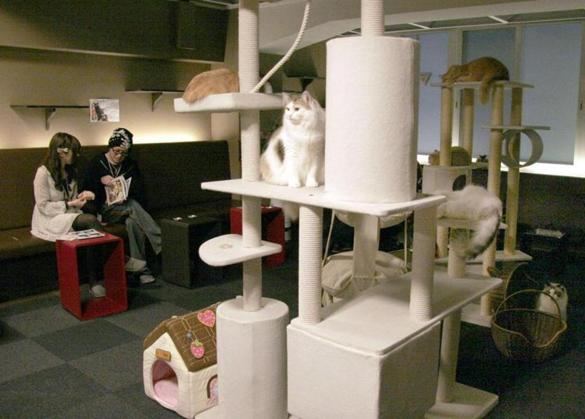

Design architect utk kucing, indah ya… dan hebatnya terbuat dr recycled..
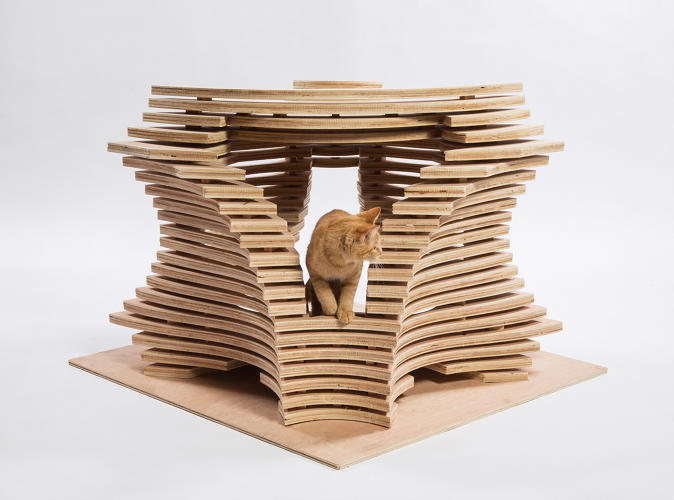
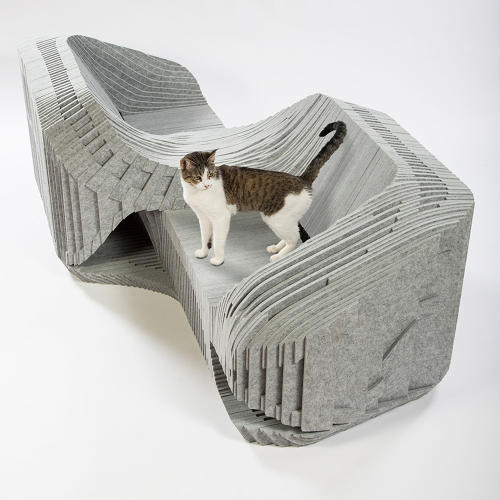

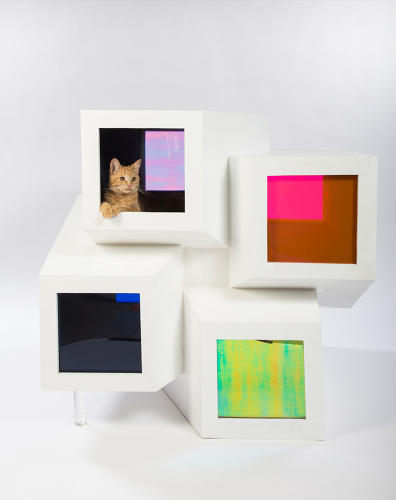
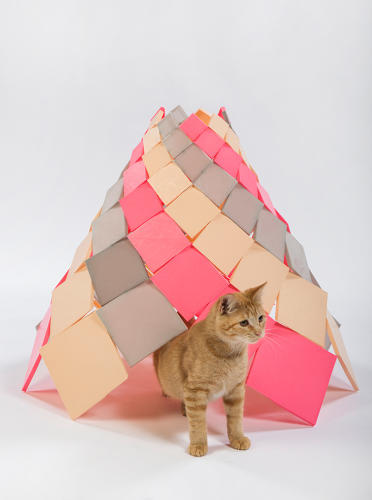

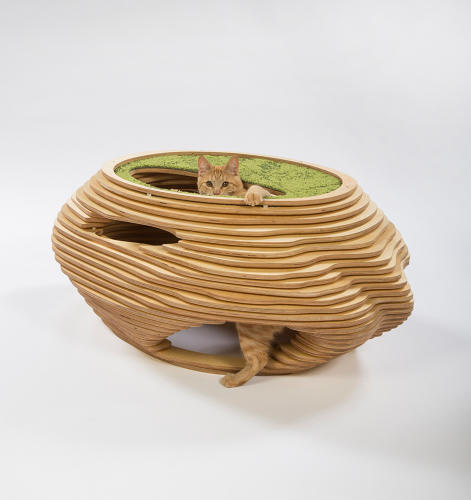
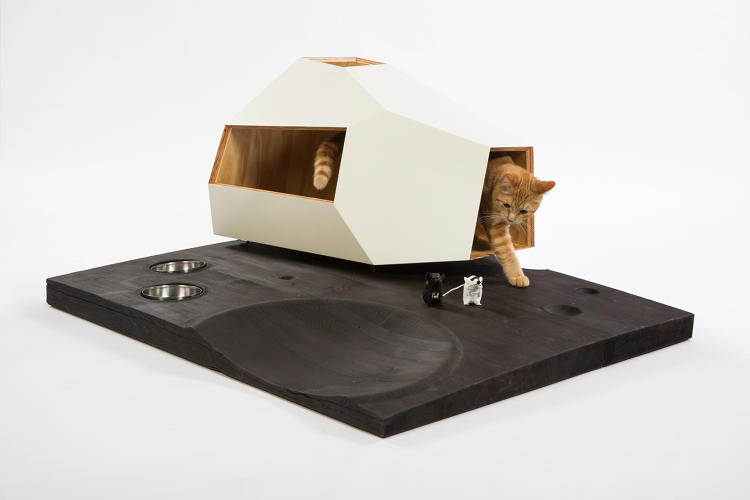

Disaat Pagelaran elite para pemimpin dunia, tak membuat keder kucing naik panggung,
G20 2015 Turky.

. THE CAT WHO DETECTED A GAS LEAK
Trudy Guy was surprised to wake up to her 6-month-old kitten, Schnautzie, sitting on top of her chest one night. The feline kept putting a paw on her nose and tapping it. Curious, Trudy got out of bed and found a broken gas pipe outside her bathroom. Firefighters later told her that if Schnautzie hadn’t alerted her, the entire house could have gone up in flames.
THE CAT IN THE WINDOW
Cats are often forced to endure a reputation for being aloof and disinterested. This stems from cats being aloof and disinterested. But Slinky Malinki, a tomcat hailing from Todmorden, West Yorkshire, helped beat that rap in 2014 when he made headlines for rescuing his owner from a potentially fatal situation. After Janet Rawlinson suffered an adverse reaction to the morphine she was taking for chronic back pain that left her in a semi-comatose state, Slinky—named after a children’s book character Janet was fond of—trotted over to a neighbor’s house and began tapping on the window with his paw to draw their attention.
The feline Morse code worked: They came out to investigate and called for medical attention. Slinky’s bravado earned him a nomination as Hero Cat of the Year at the National Cat Awards. (He lost to Cleo, a cat who began pacing when his owner was having a heart attack, prompting a call for help.)
. THE RABBIT WHO DETECTED A DIABETIC EMERGENCY
Dory the rabbit knew something was amiss when her owner, Simon Steggall of Warboys, England, was slumped over in his seat while watching television in January 2004. Simon’s wife, Victoria, thought her husband was just tired and napping—but Dory’s strange behavior led her to take another look. As the rabbit jumped up and down on his chest, Victoria noticed Simon couldn’t be roused and called for an ambulance. It turned out that he had fallen into a diabetic coma and needed a quick boost of glucose. The biggest hint? Dory wasn’t typically allowed on the furniture.
.THE PARROT WHO FENDED OFF A RANDOM ATTACKER
African grey parrot Wunsy and her owner enjoyed going for strolls in parks near their north London home. One day, the two were walking along when an unnamed attacker emerged and began assaulting Wunsy’s owner. After she was pushed to the ground, Wunsy sprang into action, raining beaked blows upon the criminal until he fled. Owner Rachel Mancino told the BBC in 2014 that Wunsy was both a “companion” and a “weapon.”
We’ve all heard the sayings before: Must love dogs. Time spent with cats is never wasted. Man’s best friend. There is no one more loyal than a cat. And for those of the Tinder set: Don’t like dogs? Swipe left.

Indeed, the rivalry between cat lovers and dog lovers has existed since the start of time, and the answer to that seemingly innocuous question—are you a dog lover or a cat lover?—carries with it either open arms or the death of a friendship. If we were to go by stereotype, cat lovers are, by nature, isolated creatures, usually of the female persuasion, who are haughty, judgmental, and destined for loneliness. Dog lovers, on the other hand, are affable, athletic, and energetic—the life of the party, readily pleased, and as easy to read as an open book.
Well, that rivalry is about to intensify: Recent research demonstrates quantifiable differences between people’s preferences for pets. And, as any die-hard cat owner will claim they’ve known all along, these studies suggest that cat lovers are more intelligent than dog lovers.
Cat got your tongue? Read on.
At the annual Association for Psychological Science meeting, researcher and associate professor of Psychology at Carroll University Denise Guastello found that the personality differences between cat people and dog people aren’t just an economical way of judging character. In part because of the environments they prefer, cat lovers scored higher on intelligence than dog lovers.
“It makes sense that a dog person is going to be more lively, because they’re going to want to be out there, outside, talking to people, bringing their dog,” Guastello said. On the other paw, “…if you’re more introverted, and sensitive, maybe you’re at home reading a book, and your cat doesn’t need to go outside for a walk.”
If you’re like your cat—a nonconformist, prone to spending a great deal of time alone—you are probably also more prone to using that time in solitude effectively, whether it’s reading or learning a new language. Such sensitivity and introversion may be because cats have 300 million neurons, while dogs have roughly half of that, Live Science reports. And that difference is significant, from the ability to survive in the wilderness to increased visual memory.
Turns out, it wasn’t satisfaction that brought back the curious cat, but knowledge—and a keen sense for how to use it. Cats—mercurial, mysterious, and savvy—have, over time, fine-tuned their communication skills with humans to persuade their owners to feed them when they’re hungry, accounting for more than one chagrined morning of interrupted sleep, whereas dogs are much more likely to follow their owners’ cues. And while dogs have the ability to sniff out drugs and detect cancer, among other illnesses, cats demonstrate more expressive and sophisticated vocalizations: It was found that a wild cat can manipulate an ambush to its advantage by possessing the ability to mimic the call of its prey. Further, dogs are, by and large, much more dependent on their owners than cats, for which evolution is largely responsible—dogs were domesticated 20,000 years before cats, and are notoriously obedient because of it. Cats, meanwhile, are much like their owners: Icons of independence and autonomy, which, according to some, are the hallmarks of intelligence and success.
Bark or mewl, pounce or purr, whether you prefer a pup to join you for runs around the park or a cat to sit on your lap as you read Chaucer; are an extrovert or an introvert or somewhere in between, one generalization is irrefutably true: We can judge the heart of a man by his treatment of animals. And when it comes to character, rarely does intelligence trump love and the capacity for compassion
 sharing is caring