The Cost Of Panic In The PMO

The Cost Of Panic In The PMO

Panic in the project office is never a good thing. Most teams operate under some level of pressure that trends up and down depending on workloads and the nature of the current project portfolio. Garden-variety pressure is healthy, prompting teams to find new ways to increase efficiency and to focus on what’s important. Panic, on the other hand, usually has the opposite effect, stifling progress and undermining the team’s efforts.

Because panic costs the project office in many ways and can ultimately bring a team to its knees, it’s important that PMPs always be on the lookout for these warning signs.

Hand with money

Productivity

Panic has an enormous impact on productivity and can quickly snowball from one missed deadline to all-out, show-stopping terror. Once panic sets in, team members often find themselves unable to focus their energy on anything other than those items that seem most urgent (even though these may not be the most important tasks on their plate). Those activities that are still moving forward according to the project plan could soon feel panic’s effects, too, as PMPs reprioritize in a last-ditch effort to get things back on track.

Morale

One of the first things to take a hit when panic grips the project office is the team’s morale. Panic is stressful and can lead team members to become more inwardly focused. Their communications often become less frequently and may stop entirely before to long. Energy levels fall, sometimes going into a gradual decline but in other instances seeming to drop off a cliff. Sustained panic, where problems in one project sap attention from another project and lead to a landslide effect across the entire portfolio, can pummel morale so badly that key PMPs may decide to seek opportunities elsewhere.


Teamwork

A team that’s in full-blown panic mode has almost zero chance of working together successfully. Self-preservation instincts often kick in, leaving little room for teammates to support one another when problems arise or to share resources if there’s even a hint there might not be enough to go around. The blame game soon begins, with sub-groups pointing fingers every which way. Team members subsequently spend even less effort on the project and instead attempt to save their own skins by trying to make the plethora of problems someone else’s fault. Anyone within the project office who is experiencing challenges in their critical-path activities may also avoid alerting others to the problem out of fear of discipline or simple embarrassment, a situation that further erodes the team’s cohesiveness.

Stakeholder engagement

Panic-stricken PMPs are generally terrible at maintaining strong communication channels, both inside the project office and with the project’s stakeholders. One reason is that the team is completely absorbed in trying to staunch the tide of problems and growing stress. Another is the desire to somehow prevent stakeholders from discovering how badly the project has gone off the rails. Unfortunately, this lack of attention is typically rewarded with diminished engagement and sometimes a complete detachment from the project as end users and sponsors begin to suspect there are serious problems within thePMO.

Executive trust

Panic causes project teams to do all sorts of uncharacteristic things, such as miss multiple deadlines, fail to alert the leadership group to impending trouble, cease outbound communications, and sometimes even misrepresent the status of particularly troubled portions of the project. Executives quickly lose faith in the PMO when it appears the team can no longer be trusted to act as prudent stewards of the organization’s funds and other resources, and the ability to raise support for future projects will almost certainly be in jeopardy.

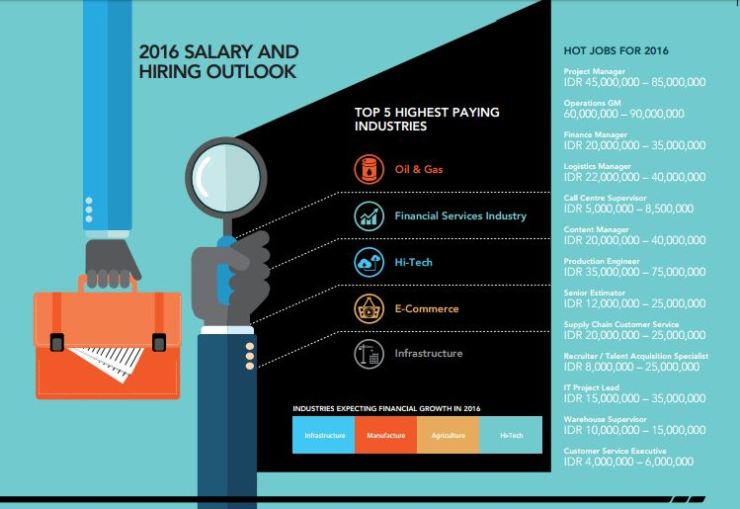
Hot jobs 2016: Project management

Dari proyeksi data PMI, tahun 2020 akan ada lebih dari 1,5 juta new jobs project management baru pertahun ,

dan project management juga merupakan hot jobs, dari survey gaji di kelly service, download :  Indonesia Employment Outlook and Salary Guide 2016

. The salary ranges in this Guide are based on actual transactions between employers and employees of Kelly Services Indonesia and represent a reflection of the job marketplace


Hot Jobs - Project management

Get your teams working together: Announcing Microsoft Planner

Get your teams working together: Announcing Microsoft Planner

FEATURES

Get your teams working together: Announcing Microsoft Planner

Productivity apps are all the rage at the moment, although they should not be considered a ‘magic bullet’ for organising your schedule or curing procrastination.

While increasing productivity is not a new thing – individuals and organisations have always striven to get more out of their day or their workforce – without a doubt, we all have more distractions and demands on our time, which productivity apps potentially provide a solution for.

Productivity Apps: Do they actually work?

Developers make all sorts of claims for their apps and their ability to increase productivity, however, they are sketchier on the hard data to back them up. With such a diverse field of products, it’s hard to come up with any real comparisons in their performance. However, a study from Salesforce suggests that productivity apps can boost worker productivity by 34 per cent. The report also discovered that 60 per cent of employees in SMEs and large enterprises use apps for work-related activities.

Yet to be effective, productivity apps need to be properly integrated into the workplace. This is one of the major stumbling blocks organisations have – getting everyone to adopt the technology and use it so that the whole team benefits. Since many people already have their own productivity apps downloaded on their mobile devices, it can be difficult to get buy-in on a new system.

People also bemoan the time it takes to get set up and started, questioning whether it is a productive use of their time managing their productivity app! Therefore, if your organisation is planning to implement a new app it is important that employees receive the right level of support to enable them to use if effectively.

Another issue is how to integrate the app with the IT systems the organisation is already using. While most apps allow a certain amount of integration between them and other tools, these are not necessarily the ones your business is using. Furthermore, there are security issues that organisations need to be aware of when employees are using apps with a personal account. This could mean that sensitive company information is taken out of your organisation’s secure environment, and stored on the servers of a third-party app developer, without the protection extended by a business account.

Microsoft Planner

This is why the introduction of Microsoft Planner could be the solution your organisation is looking for. Microsoft, who has produced arguably the most well-known and utilised productivity app of all time – Microsoft Outlook – is getting in on the current ‘productivity app-ism’ with a new addition to their Office 365 suite – Planner.

As many businesses, large and small, already use Office 365, integration with many of the organisation’s IT systems is straightforward and intuitive, increasing the likelihood of take-up by members of staff. If you already have a subscription, there is no additional fee and it all integrates with your existing logins and Office 365 apps.

Do You Need Microsoft Planner?

office 365 plannerEssentially it is a task-planning tool designed to enable teams to collaborate and track work better. Users of Trello and Asana will be instantly familiar with its card-based layout – the cards representing tasks – with a drag and drop interface to record progress. There are also some neat colour coding tricks, and visually appealing and easy to read dashboards to help teams track progress.

If you are not familiar with team task planning apps, the clue is really in the name – they allow teams across your business who are working towards a single goal or outcome to organise their tasks, understand where the initiative as a whole is going, identify where issues might be and collaborate to reach the goal quicker. Essentially, a clever digital organiser for teams.

What they are not is a project management tool, for which Microsoft has ‘Project’. Project management applications usually focus on having a single person or team driving the initiative (the project manager(s)) and distributing tasks for the team to complete. Many organisations consider this an outmoded way of working but for complex projects, it is usually still considered necessary.

Planner bridges the gap between project management tools and personal task lists, which you can set up in Outlook. Instead, Planner is designed for team collaboration, providing a tool to assign tasks to individuals, to manage progress, for internal communication about team projects, and to provide an overview of projects in progress.

Personally, thinking about my own company and how we manage projects and workload here, I think productivity apps, whether Planner, Trello or any other, can be a valuable tool. As well as providing everyone with the big picture and the finer detail, it also increases accountability as individuals can see how their activities (or lack of) impact on each project and each other.

With email notifications set up to remind you of a forthcoming deadline, it can certainly focus the mind on the job and help individuals prioritise their workload.


Bruce Penson, Managing Director of Pro Drive IT

How to Work Together on a Family Project

​WORK & FAMILY : 

How to Work Together on a Family Project
Getting children and parents to team up seems impossible but worthwhile; Here are some strategies to foster teamwork

Can families translate sibling competitiveness into teamwork skills?
        

By Sue Shellenbarger

July 12, 2016 2:13 p.m. ET, Wall street Jurnal


Time to clean out the garage. Anyone game for a family project?
For plenty of parents, the response will be: Have you met my children? The idea of getting the whole family to team up on a shared project and pull it off without squabbling can seem like an almost mythical ideal.
It is possible to instill teamwork in a family, and psychologists say it is important to try. Patterns of collaboration set in childhood go a long way toward shaping children’s future behavior in the workforce.

Michael Sheehan used to challenge his three young daughters years ago to compete to “see who can get ready and in bed first,” says Mr. Sheehan of Walnut Creek, Calif. The tactic worked at first but soon led to tears and accusations of unfairness, says Mr. Sheehan, who blogs at HighTechDad.com.
He dropped the ploy after noticing that his wife Sylvia got better results by encouraging the girls to collaborate, Mr. Sheehan says. When Natasha, now 17, Alexandra, 14, and Sally, 12, were younger, Ms. Sheehan pressed them to help each other get ready for school on time, telling the older girls, “if Sally’s late, then everyone is late.” After Natasha and Alexandra taught Sally to lay out her clothes the night before and allow time in the morning to brush her hair, all three made it to school on time.
Ms. Sheehan rewarded them by allowing them to adopt a Chihuahua named Rufus. The girls are responsible for Rufus’s care. They’re also expected to team up weekly to help their parents clean the house, divvying up tasks among themselves. Ms. Sheehan hopes they’re laying the groundwork for close lifelong bonds.
“Cleaning is a lot harder” if one of them is away, Alexandra says. Sally says collaborating “definitely gets the job done faster, and it makes things more fun when you have somebody to talk to.” The sisters are pooling their savings in hopes of buying a car to share.
When Alexandra and Sally recently redecorated the bedroom they share, a wall collage of photos they created made the room seem cluttered to Alexandra. The sisters disagreed, then came up with a compromise—hanging Polaroids on a string from the ceiling instead, Alexandra says.
From left, Alexandra, Natasha and Sally Sheehan. Ms. Sheehan schedules the three sisters’ breakfasts and after-school snacks together so they have “plenty of time to bond together,” she says. Natasha, a ballerina, is studying near home with the San Francisco Ballet rather than at a boarding school abroad, in hopes that the sisters remain close.

From left, Alexandra, Natasha and Sally Sheehan. Ms. Sheehan schedules the three sisters’ breakfasts and after-school snacks together so they have “plenty of time to bond together,” she says. Natasha, a ballerina, is studying near home with the San Francisco Ballet rather than at a boarding school abroad, in hopes that the sisters remain close.
A common pitfall for parents is “falling into the trap of thinking that everyone in the family must assign the same importance to a project as they do,” says Dave Anderson, a clinical psychologist at the Child Mind Institute, a nonprofit mental-health organization in New York City. “If kids don’t see the point, they’re going to start arguing,” Dr. Anderson says.
He suggests figuring out incentives that will motivate each child. One child might see gaining more space for sports gear as reason enough to help clean the garage. Another might like making room to park the car, clearing the driveway so she can shoot hoops.
When Cara Stevens ’ 14-year-old daughter Alexa suggested holding a family tag sale next week, Ms. Stevens says, her response was, “Let’s do it.” Alexa’s brother Brandon, 9, had no interest in helping until Ms. Stevens offered both children a share of the proceeds. Brandon quickly began sorting through games and DVDs and offered dozens of items for sale, says Ms. Stevens, a Greenwich, Conn., marketing consultant.
Many parents regard school or youth sports as the primary places for learning teamwork, and fail to notice opportunities to teach it at home. Positive reinforcement works best. It’s better to “catch kids being good and reinforce it” by taking note and praising them for helpfulness or maturity, says Dr. Anderson.
Eddie Garcia, a youth-sports coach from Henderson, Nev., says he uses the same techniques he uses with young athletes to teach teamwork to his two children, Haley, 13, and Ryan, 9. He takes pains to catch them doing something well, even if it’s as simple as Haley’s getting a bottle of water from the refrigerator for Ryan. “There is constant praise around our house for the behavior we want to see,” reinforcing an overall message of “together, we’re better,” he says.
He also models the behavior he wants, working side-by-side with his children on even the most mundane projects, such as cleaning up the backyard after their two dogs.
Of course, many children’s schedules are so jammed with activities and homework that parents wonder, “How on earth can we ever get everybody together on board at the same time to do anything?” says Richard Rende, a Paradise Valley, Ariz., developmental psychologist and co-author of “Raising Can-Do Kids.”
Fostering teamwork doesn’t require setting aside blocks of time, Dr. Rende says. Children can learn to collaborate by negotiating everyday disputes. Ms. Stevens and her husband Larry step back and let Alexa and Brandon work out a compromise on such questions as choosing a restaurant on a family vacation.
Don’t assign roles, and resist jumping in to broker an agreement when conflicts arise, Dr. Rende says. Give children a chance to find a compromise. If the talk turns aggressive, suggest problem-solving tactics from the sidelines. If two siblings are watering the garden and start battling over whether the younger sibling knows how to use the hose correctly, try coaching the older one: “Do you think you can show your brother how to use it?”
The way parents talk with children and each other sets an example. Children can learn collaboration by watching parents share decision-making or cooperate on tasks. Parents also can set a cooperative climate by working side-by-side with children on everyday tasks, such as clearing and rinsing dinner dishes and loading them into the dishwasher.
The Sheehan sisters in the kitchen at home. They team up to help with weekly housecleaning and other chores.

The Sheehan sisters in the kitchen at home. They team up to help with weekly housecleaning and other chores.
If the family begins a project and starts squabbling right away, try creating a shared mission, such as, “if we all work together well enough, we can finish in time to go out to dinner.” 
Then applaud any moves toward collaboration: “Yes! What a team!”
 Another workaround is to put siblings on a team against the grown-ups and see who can finish first. Above all, be patient: No family succeeds in every attempt at teamwork. Also, children’s collaboration skills typically improve as they get older.
Parents can assess their own family climate by running an informal experiment at home such as suggesting everyone plan a meal together. Notice how often family members argue for what they want compared with trying to find foods that please everyone, Dr. Rende says. If you find yourself dictating the menu, or if everyone is out for him or herself, try slowing down, listening more and modeling collaboration yourself.
Write to Sue Shellenbarger at sue.shellenbarger@wsj.com

Office politics, how to get people to focus on the work, not politics

​How Facebook Shuts Down Toxic Office Politics

how to get people to focus on the work, not politics

Humans are political animals, so there’s probably no way we’ll ever completely stop building alliances, tracking power, and lobbying for resources. And why should we? Getting along in groups and making your voice heard are essential skills for success.
But there is definitely such a thing as too much politics. If you’ve ever worked in an environment where everyone was intensely focused on their own status, you probably don’t need a study to confirm that. But if you do, research exists. Excessive politicking is both bad for your career personally and, taken to extremes, for productivity overall.
This is a fact the smart folks at Facebook know well. Rather than scheming for promotions or undermining office rivals, the company wants their people focused on building great products. So how do they shut down office politics before it gets out of control? Jay Parikh, Facebook’s global head of engineering and infrastructure, recently shared a bevy of tips in a long and detailed HBR blog post. Here are just a few of his ideas:
1. Don’t hire self-centered people.

All the tips and tricks in the world won’t help you shut down status jockeying if your team consists largely of drama queens and self-interested empire builders. Which is why Facebook’s first piece of advice is simple–don’t hire them. How can you avoid it? Parikh suggests you use these questions when you interview:
“Describe your responsibilities as a leader.”

“Can you tell me about four people whose careers you have fundamentally improved?”

“Describe a few of your peers at your company and what type of relationship you have with each of them.”

“What did you do on your very best day at work?”

“What does office politics mean to you, and do you see politics as your job?”

“Tell me about a project that you led that failed. Why did it fail and what did you learn?”

“Successful candidates should clearly demonstrate that their priorities are company, team, and self–in that order,” he explains.
2. Move the goal posts.

If you make getting into management the ultimate career prize, people will fight to get into management. But is that really where you want your people directing their energies? Probably not. Therefore, Facebook makes management a career option, not a status symbol.
“At Facebook, moving into management is not a promotion. It’s a lateral move, a parallel track. Managers are there to support people and to remove barriers to getting things done,” Parikh explains. “They are put in those positions because of their strong people skills.”
How do you keep your people keen if they’re not focused on earning a promotion to management? “You still have to provide a way for ICs [individual contributors] to have career challenges and growth opportunities outside of becoming managers. We provide different opportunities for growth by empowering employees to work on new projects or in new groups when interested,” Parikh says, explaining different ways the company has for employees to “broaden their areas of expertise and expand or focus their scope.”
3. Train managers to defuse politics.

“This may be the hardest thing to do, but it’s probably the most important,” says Parikh, who notes that employees often blame “politics” when they’re frustrated, even if politics isn’t really the problem. For instance, someone might think a decision didn’t go their way because of a personal rivalry when really the cause was insufficient resources or a change in strategy.
Managers need to nudge people to see things more clearly. How?

“When someone does cite politics as the cause of an issue, our managers dig in and try to find out what’s really going on. Simply asking, ‘What do you mean by that?’ or ‘Can you tell me about the specifics of the situation?’ is often a good place to start. We’ve found digging in and asking for specifics on what the person is seeing and feeling usually will help get to the root of the issue–and it’s usually not politics,” writes Parikh.