just saving your time,
clik new, from menu file, then choose new from existing project , & choose your file folder.


just saving your time,
clik new, from menu file, then choose new from existing project , & choose your file folder.
Remote team adalah trend dlm business perusahaan, menempatkan beberapa team member project dgn langsung on site bersama customer utk implementasi project.
Hal yg melatari adalah saving cost ,
PRofit and loss, competition.
Tentu memanage team yg setiap hari bersama dgn kita dan remote sangat berbeda , pada awalnya.
Bila kita membangun dr awal , ada hal hal yg perlu diterapkan, sebagai project manager :
1972: Five former IBM employees Hasso Plattner, Dietmar Hopp, Claus Wellenreuther, Klaus Tschira, and Hans-Werner Hektor launch a company called SAP (Systems Analysis and Program Development). Their vision: to develop standard application software for real-time business processing. Still a private corporation, the company is headquartered in Weinheim, Germany, with its main office in nearby Mannheim; however, the five company founders are most often found at their customers’s computer centers, including ICI in Östringen. The first software programs were written primarily at night and on weekends. At the end of the first business year, SAP already had nine employees and a turnover of DM 620,000.
1973: The first financial accounting software is completed, the RF system. This forms the basis for the continuous development of other software components in what came to be known as the R/1 system. New customers from the local region implement SAP software, including the cigarette manufacturer Rothändle in Lahr and the pharmaceutical company Knoll in Ludwigshafen. These new customer use IBM computers and the DOS operating system.
1974: SAP demonstrates its flexibility for the first time. Within eight weeks, the RF system is converted from DOS to OS. There are already 40 companies on the reference list.
1976: SAPGmbHSysteme,AnwendungenundProdukteinderDatenverarbeitung (Systems, Applications, and Products in Data Processing) is set up as an auxiliary sales and marketing firm.
Five years later in 1981, the private corporation established in 1972 (Systems Analysis and Program Development) dissolved, and its rights are transferred to SAP GmbH, giving the company its current name (Systems, Applications, and Products in Data Processing). SAP now has 25 employees and a turnover of DM 3.81 million.
1977: The company headquarters moves from Weinheim to Walldorf. For the first time, SAP installs its system at customer sites outside Germany; two Austrian companies decide to implement SAP software. The company is reorganized to support active sales and distribution.
1979: SAP starts to use its first own server, a Siemens 7738. Previously, SAP employees carried out all development in the data centers of regional companies, such as ICI, Thermal, Knoll, Grünzwieg+Hartmann, and Freudenberg. SAP’s first “development center” is still housed in rented space; however, work is already underway on the first stage of construction for a company headquarters building. Intensive work with IBM’s database and dialog control system provides the impetus for a new approach to SAP software. SAP R/2 is brought into the world.
1980: SAP moves into the company’s first building on Max-Planck-Strasse in Walldorf’s industrial park. The software development area and its 50 computers are now finally under one roof. The new data processing infrastructure is also built. The Siemens 7738, an IBM/370-148, is installed, although this is changed to a higher performance 4341 later in the year. This IBM model has 4 MB of memory. The palette of products is also increased. The RV order processing software is added to the product range.
1982:
SAP celebrates its 10th birthday. Its offices are already too small and the first building extension is built in record time. Over 250 companies in Germany, Austria, and Switzerland work with SAP software. Revenue reaches approximately DM 24 million, and the company has 100 employees. One of the company founders leaves the company.
1984: SAP takes on 48 new employees. This increase in personnel resources is brought about in particular by the further development of SAP’s modules (RK, PPS, and RP). SAP (International) AG is founded in Biel, Switzerland. The intention is to deal with foreign markets from this base in Switzerland. SAP has 163 employees and revenues of DM 46 million.
1986: SAP founds its first country subsidiary in Austria. It also opens its first branch office in Ratingen, near Düsseldof, Germany. SAP increases its capital stock from DM 500,000 to DM 5,000,000. The growing number of employees leads to the creation of smaller organizational units headed by department managers. A new financial regulation leads to a flood of orders: approximately 100 new orders are received for SAP’s asset accounting software. After three years in development, SAP’s new human resources software is made available to customers. The company makes its first appearance at the CeBIT software trade fair in Hanover, Germany. Revenues reach the DM 100 million mark earlier than expected.
1987: Work begins on SAP’s training center in Walldorf’s industrial park. The first SAP software congress in Karlsruhe is used as a platform for the exchange of information between users and interested parties. The new generation of servers from IBM means that SAP software is now available to midsize companies (annual revenue from DM 30 million to 200 million). SAP Consulting is founded to serve this customer sector. The standardization of software production becomes an incentive for SAP to start developing a new generation of software: SAP R/3.
1988: SAP GmbH becomes SAP AG. In October, 1.2 million shares are listed on the Frankfurt and Stuttgart stock exchanges. SAP’s international business grows; country subsidiaries are established in Denmark, Sweden, Italy, and the United States. The international training center is opened in Walldorf. This also incorporates a sport park for SAP’s 940 employees. Dow Chemicals becomes SAP’s 1000th customer. To meet the requirements of specific industries, SAP begins to develop RIVA, a billing and administration system for utilities.
1990: SAP stock reaches DM 85 million following the issue of preference shares. The increased funds are used to finance increasing investments. DM 110 million is made available for R&D, both for the further development of R/2 and the new development of R/3. SAP now has over 1700 employees and its revenue exceeds DM500 million.
1991: SAP presents its R/3 system for the first time at the CeBIT in Hannover. The product meets with overwhelming approval due to its client/server concept, uniform appearance of graphical interfaces, consistent use of relational databases, and the ability to run on computers from different providers. Revenues and employee numbers continue to rise. At the end of the year, SAP has 2685 employees in Germany and its 14 subsidiaries, and has revenues of DM 707 million.
1992: After successful installation at selected pilot customers, SAP R/3 is released tothegeneralmarket.ThisheraldsthestartofanewstageinSAP’sgrowth.Asit celebrates its 20th anniversary, SAP intensifies its partner strategy in accordance with the expected high installation figures for R/3. Independent consulting companies support customers during the installation of R/3.
1995: SAP in Germany increases its sales activities targeted at midsize companies by collaborating with system resellers. The American company Burger King, Inc. is the 1000th Human Resources customer. Microsoft also begins to use SAP. Shortly afterward, the German Manager-Magazin chooses SAP as its company of the year. Deutsche Telekom AG implements R/3; it requires 30,000 R/3 workstations and represents the largest contract in the company’s history.
1996: SAP and Microsoft present a joint Internet strategy. Coca-Cola, the largest soft drinks manufacturer in the world, decides to implement SAP R/3. A number of SAP customer events set new records. At the European SAPPHIRE ’96 in Vienna, 4,300 customers and interested parties take the opportunity to gain information about SAP’s products and strategies, and over 8,000 participants visit the American SAPPHIRE. SAP is named company of the year for the third time by Manager-Magazin.
1997: SAP celebrates its 25th anniversary. Among the guests at the official celebration is the German Chancellor Dr. Helmut Kohl. SAP’s earnings before taxes exceeds the DM billion border for the first time. Customers like Daimler-Benz and General Motors decidetoimplementSAPR/3andmorethen two million users worldwide work with SAP products.
1998: Dietmar Hopp and Klaus Tschira, two of the founders of SAP, announce their decision to leave the board of directors; both move into the supervisory board. Dietmar Hopp takes over the presidency. Hasso Plattner and Henning Kagermann are appointed as co-chairman of the board of directors. From August, SAP shares can be bought on the New York Stock Exchange. More than 15,000 participants come to the 10th SAPPHIRE USA in Los Angeles, where the main topic is EnjoySAP.In this year, worldwide, 6,500 new employees start at SAP an increase of 50% to the existing workforce.
1999: In May, Co-Chairman and CEO Hasso Plattner announces the mySAP.com strategy, heralding the beginning of a new direction for the company and its product range. mySAP.com connects e-commerce solutions with existing ERP applications using up-to-date Web technology. In the same year, numerous my SAP.com customers are won, among them Hewlett-Packard and the pharmaceutical company Hoechst Marion Roussel. Almost 15% of the revenue of EUR5.1 billion is used for research and development.
2000: 10 million users, 36,000 installations, 1,000 partners, and 22 industry solutions: SAP is the leading global provider of e-business software solutions that integrate processes within and beyond company boundaries. SAP, with headquarters in Walldorf, Germany, is the third largest independent software provider worldwide. With the continuous extension of the product and services portfolio, SAP changes from a component to a solution provider. Nestlé signs the biggest contract in SAP history up to this point.
2001: The New Economy bubble has burst, but the trust in SAP and its solutions is not broken, the revenue reaches EUR 7.3 billion. By taking over TopTier, SAP extends its solution offering by company portals.
2002: While the success for SAP began with SAP R/2, in 1992 SAP R/3 was responsible for the international breakthrough. The brand SAP represents high quality enterprise software. Shai Agassi becomes member of the board of directors and becomes responsible for new technologies
2003: An era ends. Hasso Plattner, the last of the founders of SAP, leaves the board of directors and is elected head of the supervisory board. In January, SAP announces the solution concept behind mySAP Business Suite. In addition to the name change from mySAP.com to mySAP Business Suite, SAP introduces a new ERP solution: mySAP ERP. With SAP Labs China in Shanghai, SAP opens the ninth development site outside Walldorf. Research centers in India, Japan, Israel, France, Bulgaria, Canada, and the United States contribute expert IT knowledge for SAP.
2004: Enterprise Services Architecture delivers the first version of SAP NetWeaver 04. The resonance from the new integration and application platform is overwhelming. By the end of 2004 the new product has more than 1000 customers. In total, more then 24,000 customers in over 120 countries run 84,000 installations of SAP Software. SAP announces the future of Enterprise Services Architecture. It is planned that by mid-year all enterprise applications of SAP will be service-based and offer the customer the utmost flexibility.
Ketika Ada beberapa project yg berhubungan satu sama lain, daripada menyatukannya dan membuat ribuan baris task activities yg buanyak, dan kelemahan ms Project adalah lambat dlm processing , tak jarang restart sendiri, dan membuat ada pekerjaan yg harus diulang lagi,
ada trick yg bisa meringankan beban penderitaan di atas:
dgn menu Project, lalu dibawah plng kiri anda clik menu subproject
ada 2 pilihan : saling mengupdate atau tdk saling mengupdate
kalau di tick berarti, Antara master dan subproject akan saling meng update bila salah satu ada yg diubah schedulenya,
sebaliknya bila di untick tidak akan berpengaruh , satu sama lain, jadi seperti copy saja.
kemudian setelah tick link project , ada pilihan lagi Mode : read/write or read only
kalau read/write : edit bisa di master project atau subproject
kalau read only: edit hy bisa di sub project.
Menu : project then click Subproject to insert subproject to master project.
option :

Link projects to create a master project – Project
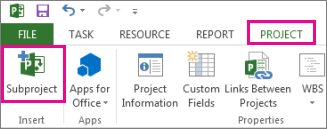
If you link projects that have resources with the same name, you’ll create duplicate resource names, which could be confusing. To avoid this, uncheck the Link to project box in the Insert Project dialog box. Doing this will ensure that the resource information in the master project (such as pay rates, resource calendars) will be honored over the subproject resource information.
Note: When you update an unlinked subproject from within the master project, the original subproject file will not show this change.
<img alt=”” style=”width: 1px; height: 1px” src=”//c.microsoft.com/trans_pixel.aspx” />
1) berorientasi pada Sasaran atau goal orientated
Salah satu perbedaan terbesar antara orang sukses dan orang gagal adalah pola pikir berorientasi tujuan.
Orang-orang sukses memiliki visi yang mereka inginkan hidup dan karir mereka sejalan dgn visi mereka.
Mereka membuat tujuan dan rencana tindakan yang akan membantu meraih kemajuan mereka semakin dekat dengan visi mereka.
Mereka memahami memiliki meraih tujuan dan terus-menerus membuat kemajuan adalah kunci untuk mencapai keberhasilan.

2) Tidak ada hal seperti gagal – hanya umpan balik
Jika Anda ingin menjadi super sukses, mengadopsi pola pikir ini akan menjadi kunci. Jika setiap kali ada sesuatu yang salah, Anda melihatnya sebagai kegagalan, Anda akan sangat cepat kehilangan motivasi dan menyerah.
Orang-orang sukses memastikan mereka tetap pada jalur tujuan mereka dengan mengamati segala sesuatu sebagai kesempatan belajar.
Mereka selalu menilai dan mencari umpan balik yang mereka dapat mengambil nya dari pengalaman.
Mereka menilai apa yang berhasil, apa yang tidak bekerja, dan apa yang harus mereka lakukan berbeda pada waktu berikutnya.
3) Positif self-talk
Orang-orang sukses tidak membuang-buang waktu menyalahkan diri. Mereka tahu itu hanya akan membuat mereka merasa buruk dan kehilangan motivasi. Mereka mengakui mereka hanya manusia, mereka tidak tahu itu semua dan mereka akan membuat kesalahan.
Dan mereka OK dengan itu. Mereka tahu bagaimana untuk mencari kesempatan belajar dan cepat bergerak, berusaha untuk belajar dari kesalahan mereka dan lebih baik lagi.
4) Pertumbuhan Mindset
Salah satu alasan orang tidak sukses adalah karena mereka percaya bahwa mereka tidak bisa berubah. Mereka adalah siapa mereka.
kemampuan, keterampilan, bakat, ciri-ciri perilaku dll tetap. Akibatnya, mereka akan menghindari tantangan,
mereka percaya bahwa mereka tidak dilengkapi untuk menangani.
Orang-orang sukses memiliki pola pikir pertumbuhan. Mereka tahu mereka bisa meningkatkan, lebih baik, belajar lebih banyak, melakukan lebih.
Mereka menghadapi tantangan karena mereka tahu mereka akan belajar sesuatu dalam proses.
Mereka adalah solusi-berorientasi dan tidak melihat masalah sebagai masalah.
Mereka melihat sebagai kesempatan belajar, memberi mereka pertumbuhan yg mereka cari.
5) Kelaparan
Apapun definisi sukses, orang sukses lapar untuk itu.
Mereka tahu bahwa hidup adalah anugerah dan Anda hanya mendapatkan satu kesempatan .
Jadi, Anda harus membuat sebagian besar saat Anda berada di sini.
Orang-orang paling sukses di dunia juga tahu bahwa rasa lapar yang sebenarnya berasal dari melakukan sesuatu untuk banyak orang yg bisa kita bantu dan bermanfaat.
6) Kegigihan dan ketahanan
Hidup ini penuh rintangan. Bedanya dengan orang-orang sukses dan orang gagal adalah mereka tetap akan.
Mereka tangguh, terus mencari solusi potensial.
Terlepas dari apa tantangan yang mereka hadapi, mereka bertahan, didorong oleh tujuan menarik dan motivasi dan visi yang mereka ciptakan.
7) Mereka percaya bahwa mereka berada dalam kendali nasib mereka
Terlalu banyak orang memiliki mentalitas korban. Di mana segala sesuatu yang terjadi kepada mereka dan mereka tidak memiliki kontrol atas apa-apa. Mereka menyalahkan keadaan mereka karena kurangnya keberhasilan mereka atau kegagalan. Orang-orang sukses bertanggung jawab. Mereka mengendalikan nasib mereka.
8) keyakinan diri
Keyakinan diri merupakan inti dari pola pikir seseorang yang sukses. Mereka tahu siapa mereka, apa yang mereka tawarkan dan bahwa tidak peduli apa, mereka akan menemukan cara untuk mencapai tujuan mereka. Mereka tahu bahwa bahkan jika ada yang salah, mereka akan baik-baik dan akan bangkit kembali dengan kekuatan penuh.
9) Risk-taker
Jika Anda ingin sukses, Anda harus mengambil risiko. Tinggal di zona kenyamanan Anda dan bermain aman berarti tingkat keberhasilan Anda akan mencapai akan selalu terbatas.
Jangan salah paham. Orang-orang sukses masih akan memiliki beberapa tingkat ketakutan. Perbedaannya adalah mereka tidak membiarkan rasa takut melumpuhkan mereka. Mereka menggunakannya untuk memindahkan mereka, mendapatkan kepastian mereka dari mengetahui bahwa apa pun yang terjadi akan selalu ada sesuatu yang mereka dapat belajar. Dan meningkat.
10) Disiplin
Fokus dan disiplin adalah dua sifat utama orang-orang sukses. Mereka menempatkan rutinitas dan kebiasaan yang akan membuat mereka di jalur untuk tujuan mereka. Mereka bangun dan pergi tidur pada waktu yang sama setiap hari. Mereka menulis to-do list dan merencanakan hari mereka, Fokus dan menghilangkan semua gangguan /distractions
 sharing is caring